|
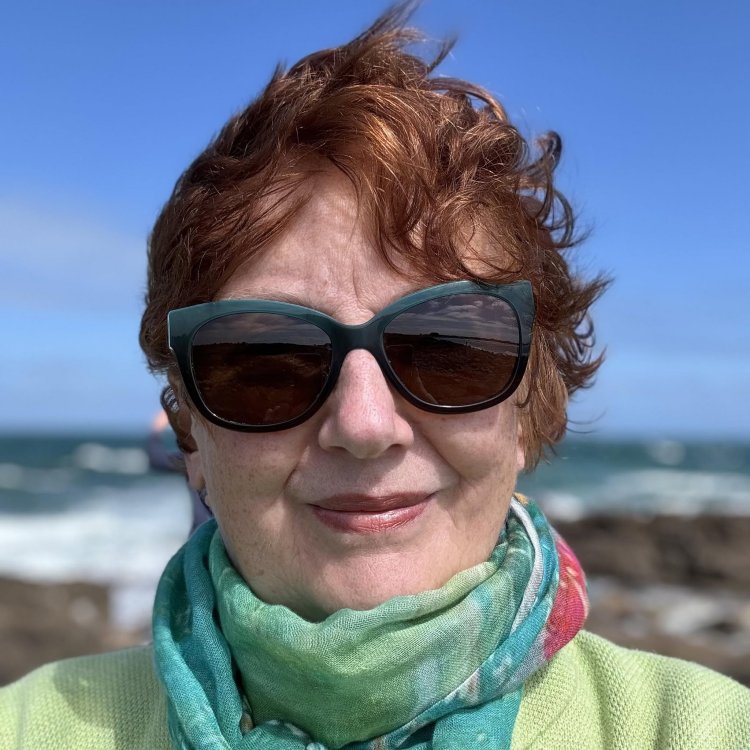
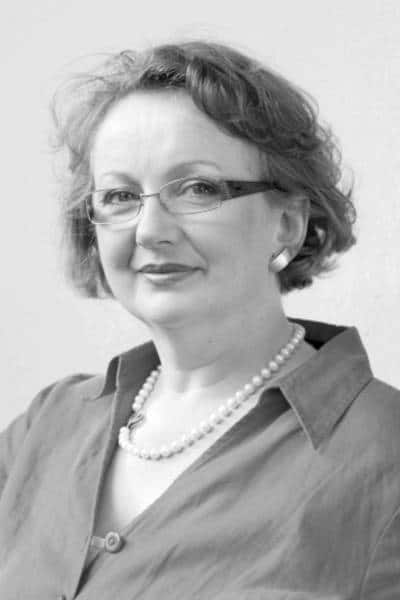
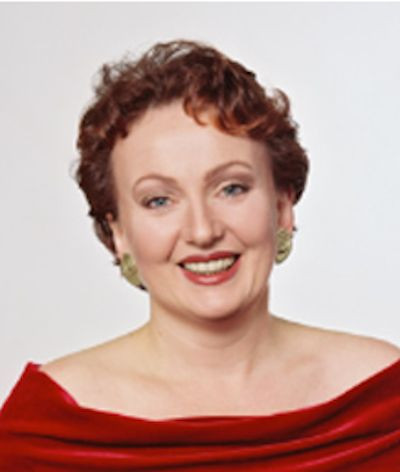
The German soprano and singing teacher, Claudia Kunz-Eisenlohr, was trained at the Richard Strauss conservatory in Munich, where her teachers included Ingrid Bettag, Benedikt Koehlen, Michael Schopper (Lied) and Ulrich Weder (opera). She took part in master-classes held by Daniel Ferro, Hans Hotter and Norman Shettler. While still a student, she already was invited to sing Königin der Nacht in W.A. Mozart's Die Zauberflöte in numerous opera houses throughout Germany and Austria and began to give extensive guest performances at German and other European opera houses. She also sang in Oratorio performances and Lieder recitals.
In 1987, the year she passed her examinations as a concert singer, Claudia Kunz obtained her first permanent engagement at the Mannheim National Theatre. In 1993 she joined the Semper Oper in Dresden, where she had sung the roles of Donna Anna and Euridice (Gluck) as a guest in 1992-1993. She sang all of W.A. Mozart's soprano roles beyond the light soprano roles, beginning with Queen of the Night in Die Zauberflöte, continuing with Konstanze in Die Entführung aus dem Serail, Fiordiligi in Così fan tutte, Donna Anna in Don Giovanni, la Contessa in Le nozze de Figaro, finally also Elettra in Idomeneo and Vitellia in La clemenza di Tito. Other important roles were Musetta in La Boheme, Sophie in the Rosenkavalier, Zerbinetta in Ariadne auf Naxos, Agathe in Der Freischütz, all four heroines in Le Contes d’Hoffmann in a staging by Harry Kupfer at the Komische Oper Berlin, Rosalinde in Fledermaus, and some major roles in contemporary operas, among them Luigi Nono's“Intolleranza. Her repertoire also includes Frau Fluth in in Otto Nicolai's comic opera Die lustigen Weiber von Windsor, and Nictoris in George Frideric Handel’s Belshazzar. She has also built up a vast Lieder and concert repertoire focussing on Classical and Romantic works. She has also worked out and performed a large concerto and recital repertoire from H. Purcell and J.S. Bach to John Cage, with an emphasis on late romantic and classical modern composers.
Claudia Kunz was invited to sing major roles at important opera houses in Europe, so in Geneva, Copenhagen, Amsterdam, Deutsche Oper and Komische Oper Berlin, National Theatre Prague, Opéra du Rhin Strasbourg, Volksoper Vienna, Karlsruhe, Bremen, Düsseldorf, Bonn, Hannover, Leipzig, Parma, Modena, Piacenza, Ravenna among many others. She worked with well-known conductors such as Giuseppe Sinopoli, Jeffrey Tate, Thomas Hengelbrock, Donald Runnicles, Stefan Soltez, Friedemann Layer, Jun Märkl, Marc Albrecht, J. Belohlavek, Miguel Gomez Martinez, Adam Fischer - and stage directors as Willy Decker, Werner Schröter, Harry Kupfer, Christine Mielitz, Christoph Loy and others.
In 2003, Claudia Kunz accepted a professorship at the Hochschule für Musik und Tanz Köln, where she became Professor of Voice at the Aachen Department. She was invited to give master-classes in Germany, Tokyo, at the Daniel-Ferro-Vocal-Programm in Italy, at Aims (American Institute of Musical Studies) in Graz (Austria ). She is also a member of the university's Equal Opportunities Committee and, under the current Managing Director Herbert Görtz, serves on the Aachen Department's board of directors alongside Hans-Werner Huppertz and Ilja Scheps. Among the singers who have studied with her and/or attended her master-classes: Fabio Lesuisse (Baritone).
Claudia Kunz-Eisenlohr is married to the pianist and university lecturer Ulrich Eisenlohr. |