|
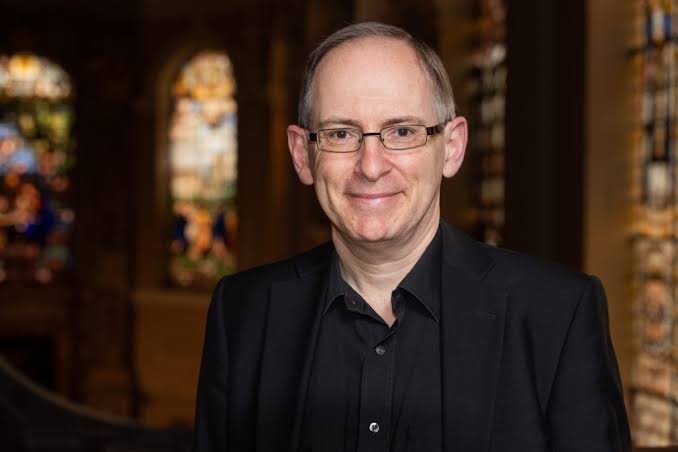
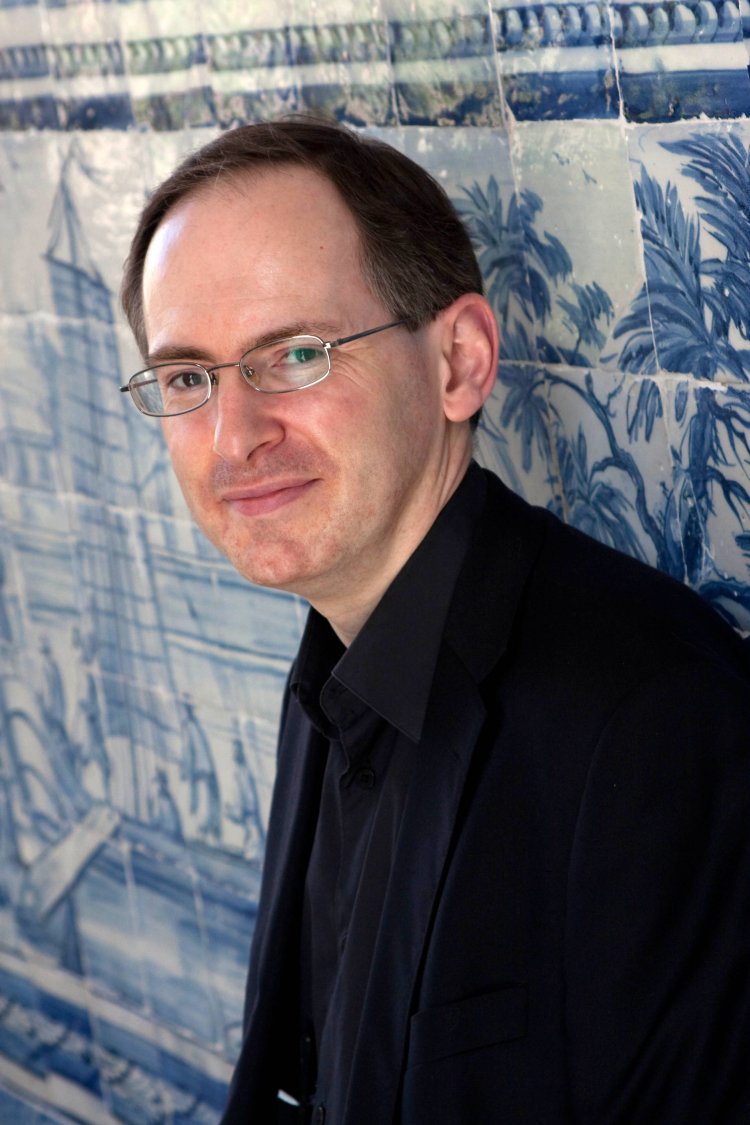
The English choral conductor, organist, researcher and music educator, Owen Rees, read music at St Catharine’s College, Cambridge, where he held an Organ Scholarship. His postgraduate research was likewise undertaken at Cambridge, under the supervision of Peter le Huray and Iain Fenlon, and he completed his doctorate in 1991.
Owen Rees was Lecturer in Music at St Peter’s College and St Edmund Hall, Oxford (1989-1991), and then Lecturer and, from 1996, Reader in the Department of Music at the University of Surrey. He took up his current posts in Oxford in 1997. At Oxford, he is a Professor of Music at the University, Fellow, Tutor and Organist of The Queen’s College, and Senior Research Fellow of Somerville College.
Owen Rees is active as both is both an acclaimed choral director and an internationally recognised scholar, and these two areas of his work inform one another. His scholarship consistently informs his performances in exciting and revelatory ways. His research is concerned principally with music from 1450 to 1650, particularly in Spain and Portugal, and in England. His monograph on the largest surviving collection of early Portuguese musical sources - from the Monastery of Santa Cruz in Coimbra - deals both with Portuguese repertories and with cultural and musical connections between Portugal and other countries. He has edited music by three of the most important Portuguese composers of the period, Manuel Cardoso, Pedro de Cristo and Duarte Lobo. His published work as a scholar includes studies of the principal Spanish composers of the ‘Golden Age’ (Cristóbal de Morales, Francisco Guerrero, and Tomás Luis de Victoria), including issues of emulation. His award-winning book about the Victoria Requiem was published by Cambridge University Press in 2019. He has also written on the sacred music of and the great Tudor composers Thomas Tallis and William Byrd.
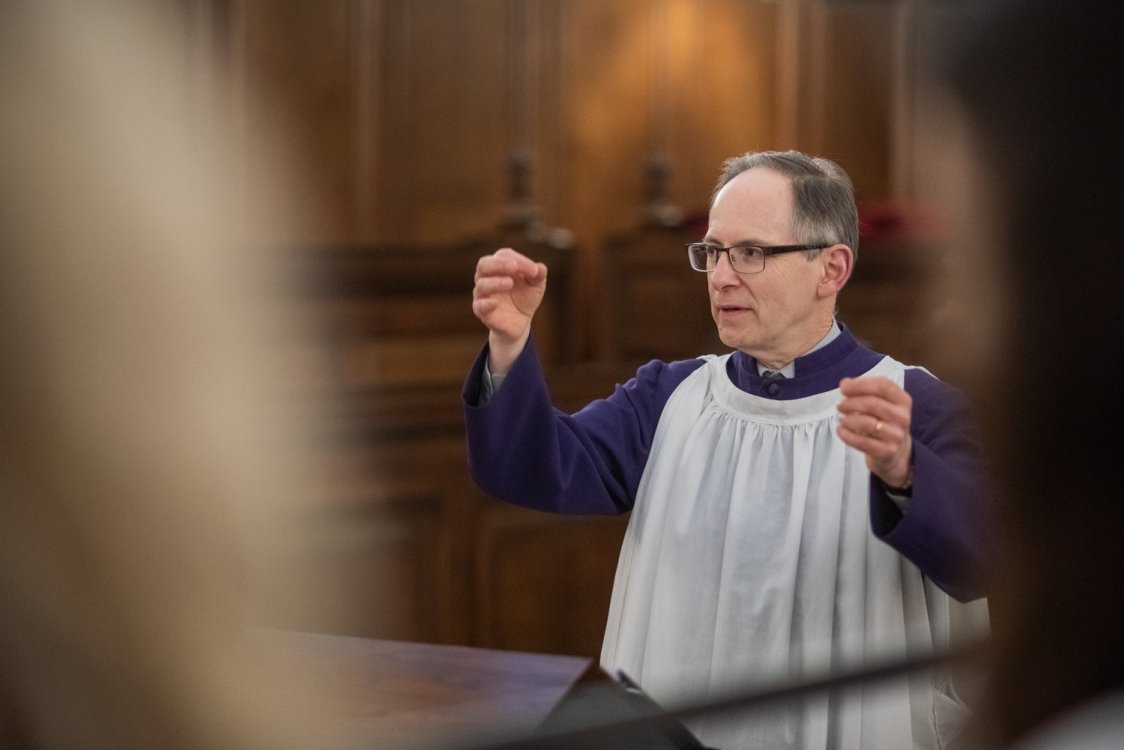
Owen Rees' research is frequently reflected in the performances and recordings of the various vocal groups which he directs: Contrapunctus (which he founded in 2010), The Choir of The Queen's College Oxford (since 1997), and The Cambridge Taverner Choir (which he and Gary Snapper founded in 1986). He has brought to the concert hall and recording studio substantial repertories of magnificent Renaissance and Baroque music, including many previously unknown or little-known works, and he has played a leading role in revealing the glories of Portuguese Renaissance polyphony to an international audience. His numerous CD recordings encompass a wide variety of choral repertory from the Renaissance to contemporary music, and his work has four times been nominated for a Gramophone Award. With his groups he has released recordings on the Hyperion, Guild, and Herald labels, including six recordings of Portuguese polyphony by Manuel Cardoso, Duarte Lobo, Pedro de Cristo, and other composers. He presents numerous concerts with these groups, in the UK and abroad, each year. He has conducted at festivals worldwide, and is in demand internationally as a leader of workshops on the performance of Renaissance polyphony. Recent festival appearances include: Oslo Kirchenmusic Festival, Festival International “Portico de Semana Santa de Zamora”, and the York Early Music Festival. As Organist of The Queen’s College, he directs the Choir in its provision of music at chapel services (three each week during termtime), concerts, tours, and recordings. His interpretations have been acclaimed as ‘revelatory and even visionary’ (BBC Music Magazine) and as ‘rare examples of scholarship and musicianship combining to result in performances that are both impressive and immediately attractive to the listener’ (Gramophone).
Owen Rees' academic posts are as Professor in Music at the University of Oxford and Fellow of The Queen’s College. His Faculty teaching at Oxford has included many areas of Renaissance music, as well as historical performance practice and choral conducting. Recent undergraduate topics have included Music and the Protestant Reformations to c1630 and Music in the Iberian World, 1492-1650. At Queen’s and Somerville he teaches many areas of the undergraduate course, including historical topics, techniques of stylistic composition, analysis, and keyboard skills. He has supervised postgraduate dissertations on a wide range of topics, particularly within the fields of Renaissance and Baroque music. |