|
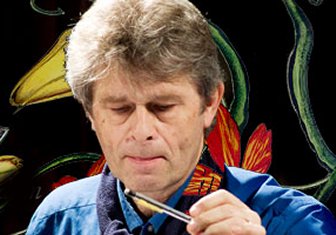
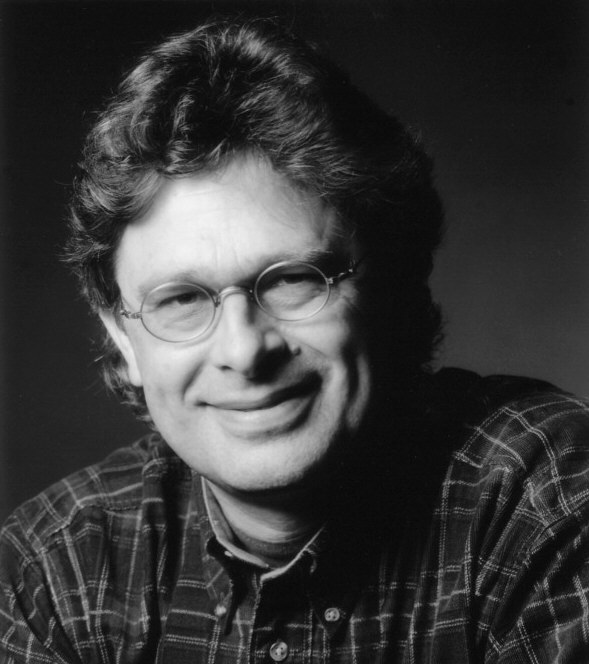
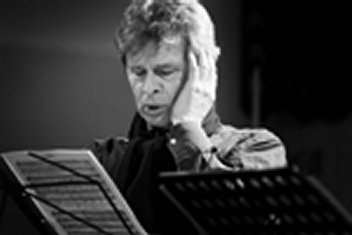
The Dutch bass, vocal ensemble leader and singing pedagogue, Harry van der Kamp, first studied law and psychology in Amsterdam. Then he studied singing with Elisabeth Cooymans and Max van Egmond at the Amsterdam Sweelinck Conservatory. He also took courses with Alfred Deller, Pierre Bernac and Felix de Nobel. From 1974 he studied with Herman Woltman.
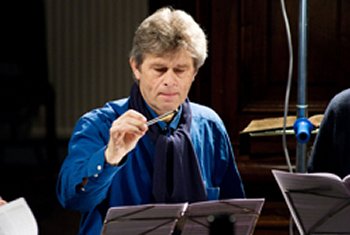
Until 1975 Harry van der Kamp was a member of Cappella Amsterdam, directed by Jan Boeke, and from 1974 until 1994 of the Nederlands Kamerkoor, whose artistic adviser he was from 1982 (or 1980) to 1987. In 1984 he founded his own ensemble, Gesualdo Consort Amsterdam, for the performance of music from the early 1600's and music of the 20th century.. This experimental ensemble has appeared with great success in many European festivals.
Harry van der Kamp was internationally known as one of the most important bass singers in the solo and ensemble repertoire of the 14th–18th centuries. He was a protagonist of the Baroque period (17th and 18th centuris) repertoire for bass solo, enjoyed a great reputation as a bass-baritone, and performed numerous oratorios, cantatas, and dialogues of that period. He was also a dedicated performer of contemporary music. His over 40-year career took him all over the world, from New York to Peking. He performed with all the leading Baroque specialists. During his career, he worked with conductors such as Nikolaus Harnoncourt (J.S. Bach, W.A. Mozart, George Frideric Handel), Hans Vonk (Igor Stravinsky, Weill), Sergiu Comissiona (Rossini, Verdi), Gustav Leonhardt (J.S. Bach, Monteverdi, Biber, Purcell), Iván Fischer (Monteverdi, Jan Dismas Zelenka, Heinrich Schütz), Bruno Weil (Haydn, Schubert), Frans Brüggen (J.S. Bach, H. Schütz), William Christie (Monteverdi, G.F. Handel), Ton Koopman (J.S. Bach, Monteverdi, W.A. Mozart), Reinbert de Leeuw (Mauricio Kagel, Milhaud, Paul Hindemith, Arnold Schoenberg), René Jacobs (Cavalli, Cesti, Monteverdi), Alan Curtis (Stradella, J.S. Bach, G.F. Handel), John Eliot Gardiner, Sigiswald Kuijken, Jos van Immerseel and Philippe Herreweghe. He was one of Europe's leading ensemble singers, appearing with ensembles such as the Hilliard Ensemble, Musica Antiqua Köln, Les Arts Florissants, Tragicomedia, La Petite Bande, Orchestra of the Age of Enlightenment, Tafelmusik, Huelgas Ensemble, La Capella Ducale, Cantus Cölln, Concerto Vocale (René Jacobs) and with the Weserrenaissance ensemble of Bremen.
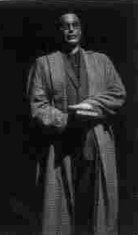
As an opera singer Harry van der Kamp had sung 30 roles in operas, many of them of the Baroque period (by Peri, Agazzari, Monteverdi, Cavalli, Landi, Cesti, Purcell, Meder, Rameau, Sacrati, Reinhard Keiser, and G.F. Handel) and in several operas of later date (by W.A. Mozart, Rossini, Berlioz and P. Hindemith), throughout Europe and America. One of the company he worked with was Nederlandse Opera, in productions of Monteverdi's Orfeo and L'incoronatione di Poppea, and also in such modern productions as Reves d'un Marco Polo by Claude Viviers, and, recently, Alexander Knaifel's Alice in Wonderland, all produced by Pierre Audi
Since 1994 Harry van der Kamp held a professorship of Singing at the Hochschule für Musik in Bremen, and he gave master-classes throughout Europe on the performance practice of early music. In 1997 and 1998 he was a visiting professor at the Sibelius Academy in Helsinki. Among the singers who studied with him and/or attended his
master-classes: Julie Comparini (Mezzo-soprano), Johann Moritz von Cube (Counter-tenor), Joep van Geffen (Bass-Baritone), Guido Groenland (Tenor), Margaret Hunter (Soprano), Dorothe Ingenfeld (Mezzo-soprano), Julia Kirchner (Soprano), Henning-Arfst Klocke (Tenor), Carsten Krüger (Bass-Baritone), Michael Lieb (Counter-tenor), Dorothee Mields (Soprano), Christian Mücke (Tenor), Petra Noskaiová (Mezzo-soprano), Chiyuki Okamura (Soprano), Guillaume Olry (Bass), Julian Redlin (Bass), Martina Schänzle (Soprano), Alexander Schmidt (Baritone), Manja Stephan (Soprano), Ute Weitkämper (Contralto, Mezzo-soprano), Marja Weyrauch (Soprano), Anna Maria Wierød (Soprano), Dorothea Zimmermann (Contralto).
Harry van der Kamp can be heard on more than 100 CD's, including Haydn's Missa in tempore belli and Nelson Mass, all of Schubert's masses, W.A. Mozart's Requiem, Verdi's Requiem and Haydn's Creation (which the BBC in 1995 hailed as the best recording of the work), G.F. Handel's Orlando (conducted by William Christie), W.A. Mozart's Le nozze di Figaro and Don Giovanni (Sigiswald Kuijken) and Die Zauberflöte (Ton Koopman), Monteverdi's Il ritorno d'Ulisse in patria and L'incoronatione dPoppea (Alan Curtis), Francesco Cavalli's Giasone (René Jacobs), Stefano Landi's La morte d'Orfeo (Stephen Stubbs), R. Keiser's Masaniello furioso (Thomas Albert's Fiori Musicali), Ezra Pound's Testament de Francois Villon (Reinbert de Leeuw) and Stephan Wolpe's Zeus und Elida (Werner Herbers). Countless great solo works and solo cantatas from the 17th century appeared on the Teldec, Astree, CPO, Capriccio, Accent and Sony labels, accompanied by Gustav Leonhardt (Purcell, Awake and with attention hear, Evening Hymn, etc.), Andrew Lawrence-King (Purcell, Begin the song), Stephen Stubbs (Monteverdi, Io nell'otio nacqui; Landi, Superbi colli; Mazzocchi, Padre del ciel), Hermann Max (Johann Christoph Friedrich Bach, Pygmalion), and Musica Fiata (Förster's dialogues and oratorios; J. Rosenmüller, Domine ne in furore tuo).
For the Sony Vivarte label Harry van der Kamp recorded North German cantatas for solo bass by Nicolaus Bruhns, Franz Tunder, Johann Christoph Bach, Heinrich Schütz, Dietrich Buxtehude and Johann Rosenmüller. He also recorded J.S. Bach's oratorios and cantatas with Gustav Leonhardt, Frans Brüggen, Sigiswald Kuijken and Thomas Albert. With his Gesualdo Consort Amsterdam he prepared the recordings of the complete vocal works by the Dutch composer Jan Pieterszoon Sweelinck.
Harry van der Kamp passed away on August 17, 2026 in Almere, Flevoland, the Netherlands, aged 79. |