|
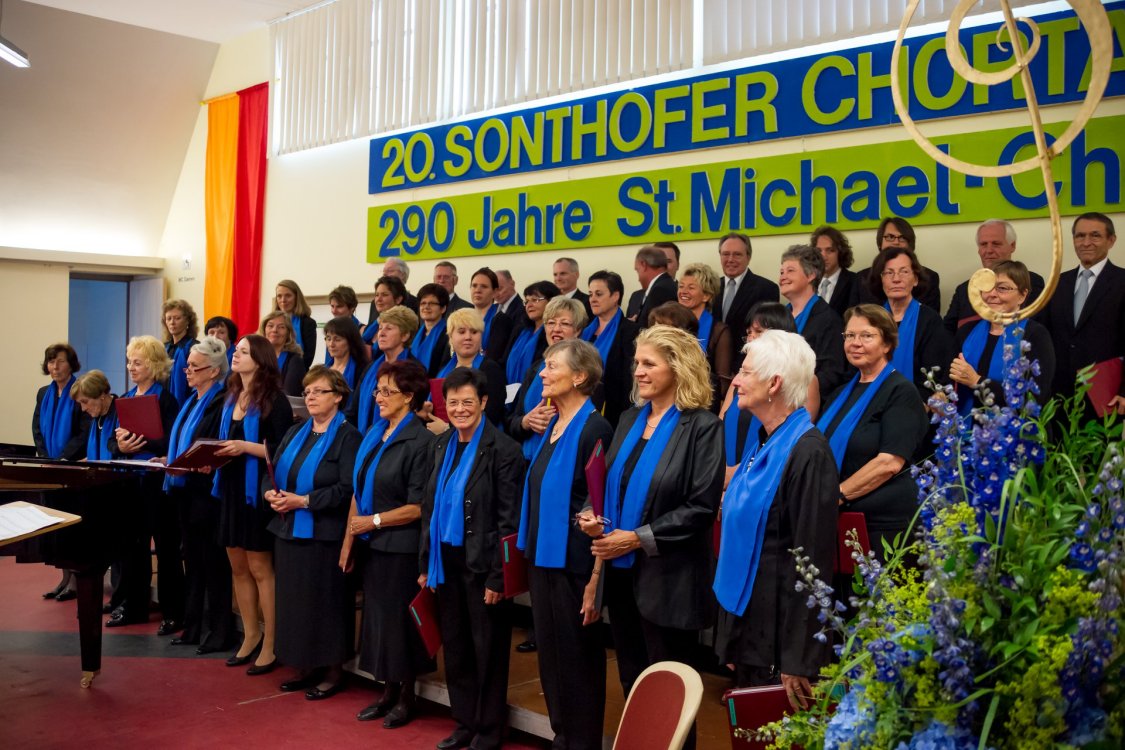
The roots of the Sankt-Michael Chor Sonthofen (SMC Sonthofen, according to the records of the Parish farrei St. Michael Parish and the City of Sonthofen archives, reach back to 1722. On the back wall of the altar in the der St. Margaretha Kapelle in the Margarethen district, the names of the Sonthofen schoolmasters and organists of the St. Michael Parish from 1722 to 1815 are listed:
Martinides Georg Vatter until 1722; Martinides Georg Sohn until 1756; Sonntag until 1763; Florian Schweighofen until 1776; Geiger until 1781; Ignatz Ambros Amma until 1792; Franz Alois Harlacher until 1798.
Here is an excerpt from the chronicle of Pastor Franz Ritter (Pastor in Sonthofen from 1922 to 1931):
The duties of organist were always combined with the teaching position. In 1746, a new organ was installed in the upper gallery of the church. In 1758, according to his will No. 12, Johann Mößmang of Sonthofen donated a sum of 100 guilders for the musical training of children. In a letter of justification, teacher Amma states that teacher Georg Martinides (d. 1756) sang the chorale with four to five people and, on the highest feast days, the small Mass by Königsberger, while teacher Sonntag sang the Mass by Hirschberger. Amma himself taught 10 people organ, violin, and singing 10 masses by renowned composers (Brixi, Kraus, Cosetti), so that, as he says, his music was considered the best in the surrounding countryside. He received a salary of 117 1/2 guilders as organist.
In 1792, his successor, Franz Alois Harlacher, confirmed the inventory and made available additional musical works belonging to him (masses by Dreyer, a Requiem by the same composer, six Tantum ergo, Laueher Vespers hymns including the Te Deum and Veni Spiritus). In the following years, church music in Sonthofen continued to be actively cultivated, both vocal and instrumental.
In 1822, a new organ with 18 stops was installed. The instrumental works performed included compositions by Führer, Drobisch, Hahn, Schnabel, Horak, Aiblinger, Kempter, Witzka, and Mettenleiter. The vocal works performed (for mixed voices) included masses by Zwyssig, Schweizer, Bender, Mettenleiter, Hasler, Stehle, and Witt. Vespers by Ett and Stehle; for male voices: works by Rampis, Horak, Ett, Führer, and Haslinger.
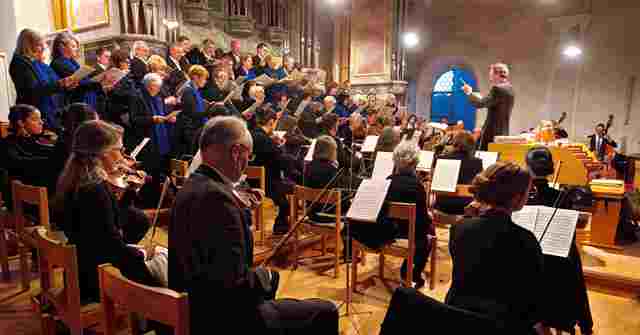
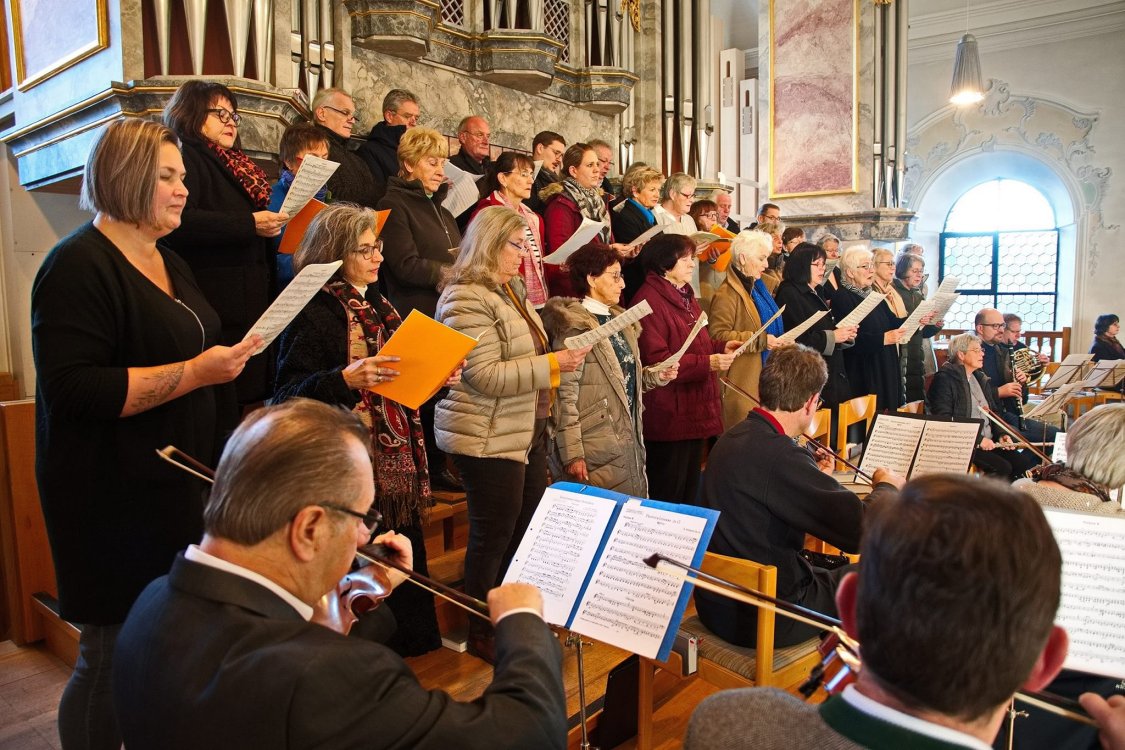
According to a report by Pastor Singer dated October 14, 1872, a choir with five sopranos, four altos, three tenors, and three basses performed. There was also a string quartet, a flute, two clarinets, two horns, two trumpets, and timpani. The teacher and choirmaster Wendelin Niederwieser earned special merit for church music in the spirit of the St. Cecilia Society. He gave singing lessons to children (three hours a week, daily during the holidays) and held at least one rehearsal per week with the trained singers. The church musicians received an annual fee of 22 guilders and 10 guilders from the parish, and 12 kreuzers for appointed positions. Congregational singing was actively cultivated in the school. A St. Cecilia Society had formed for Sonthofen and the surrounding area, which at that time had 35 members, 10 of whom lived in Sonthofen.
In 1894, a new organ by Steinmeyer was installed for 8,900 marks.
The teachers Lutz and Kappelmeyer, rope maker Krautheim (from 1920; died 1926), and organist Ludwig Mayer also served as choirmasters in the same spirit.
From 1914 to 1918, and also during the years of World War I, the church choir was active. This is confirmed by the membership of two female choir members at that time, who were honored in 1974 for 60 years of active membership. Furthermore, there is a resolution from the church council from 1953 (i.e., 1903) that, upon the death of a woman named Barth, a wreath and the reading of a Holy Mass should be arranged in recognition of her 50 years of membership in the church choir. To approve Mass.
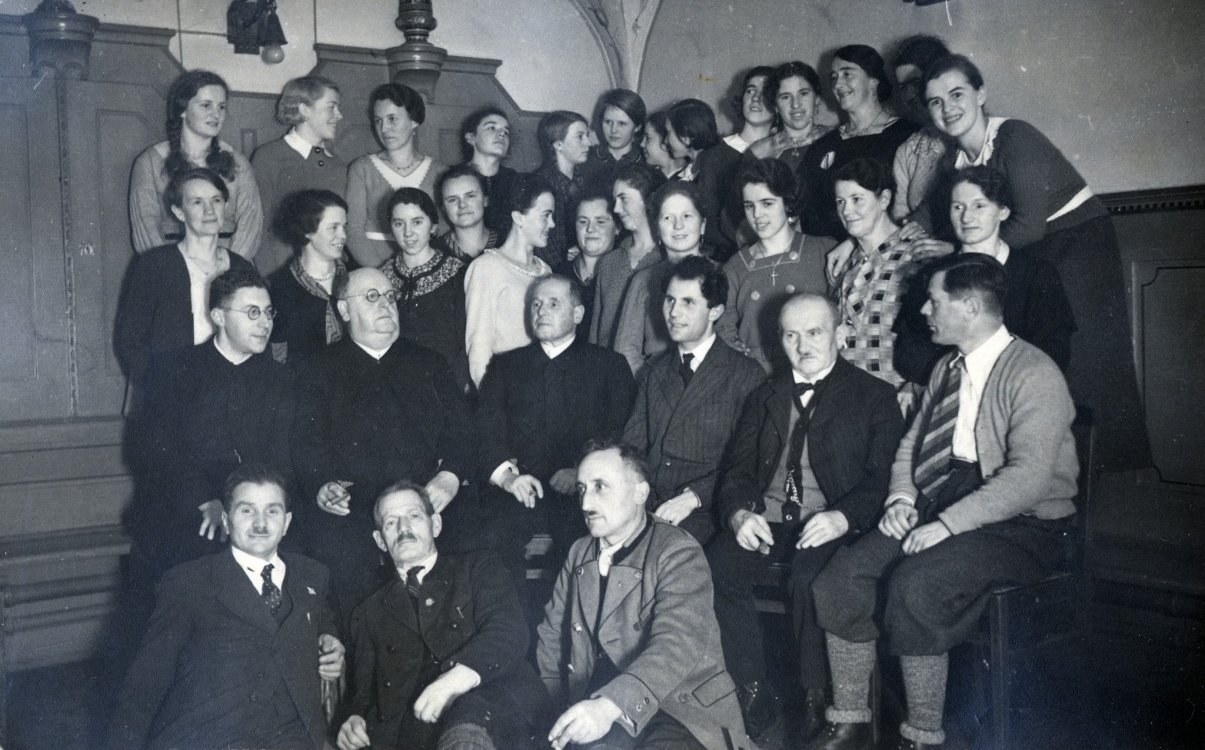
Since August 15, 1926, church music has been in the hands of Otto Gogl, who received his training at the Regensburg School of Church Music. He performs works by old and new masters (Filke, Griesbacher, Goller, Pembauer). With the support of the town council, he runs a singing school of 60 children. The choir and orchestra soon demonstrated their renowned high standards.
(Here ends the chronicle of Pastor Ritter)
In October 1941, the organ in St. Michael's Church was consecrated with Arthur Pichler, organ expert, and the church choir.
On Sunday, April 29, 1945, the town of Sonthofen was bombed.
The Catholic parish church of St. Michael was hit in the middle of a service and largely destroyed. A child of a church choir member – the choir also sang about the war years and even that Sunday on the gallery – saw several planes approaching through a west-facing window, raised the alarm, and thus probably saved the lives of many churchgoers. The priest present told the congregation to immediately stand against the walls of the church. The roof collapsed, and while there were several seriously injured, there were no fatalities.
In 1950, Otto Gogl founded the "Friends of Music" society. He worked as the full-time organist and choirmaster until October 1, 1974. Mr. Gogl led the St. Michael's choir and orchestra in an exemplary manner for 48 years, served as organist, and also made invaluable contributions to the musical life of Sonthofen and the Oberallgäu region. For 48 years, he worked for the church and the public. For this, he was awarded the Federal Cross of Merit on November 10, 1974. On October 30, 1976, Church Music Director Otto Gogl passed away.
In 1974, Richard Waldmüller succeeded him as full-time Church Music Director and led the St. Michael Choir until 1983. In 1975, Richard Waldmüller united the Sonthofen Church Orchestra, the District Teachers' Orchestra, and the Immenstadt Orchestra Association to form the "Upper Allgäu Orchestra Association."
In 1983, Choir Director Heinrich Liebherr succeeded Richard Waldmüller.
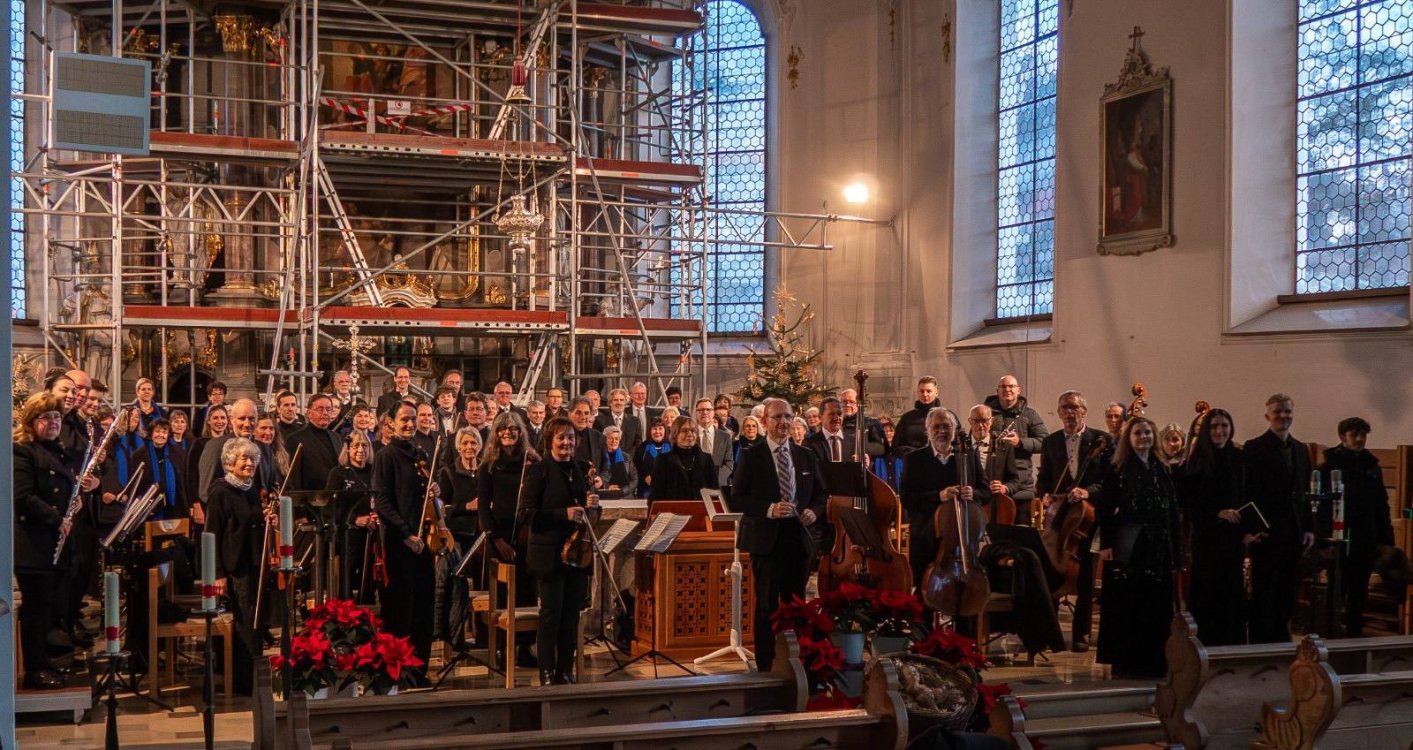
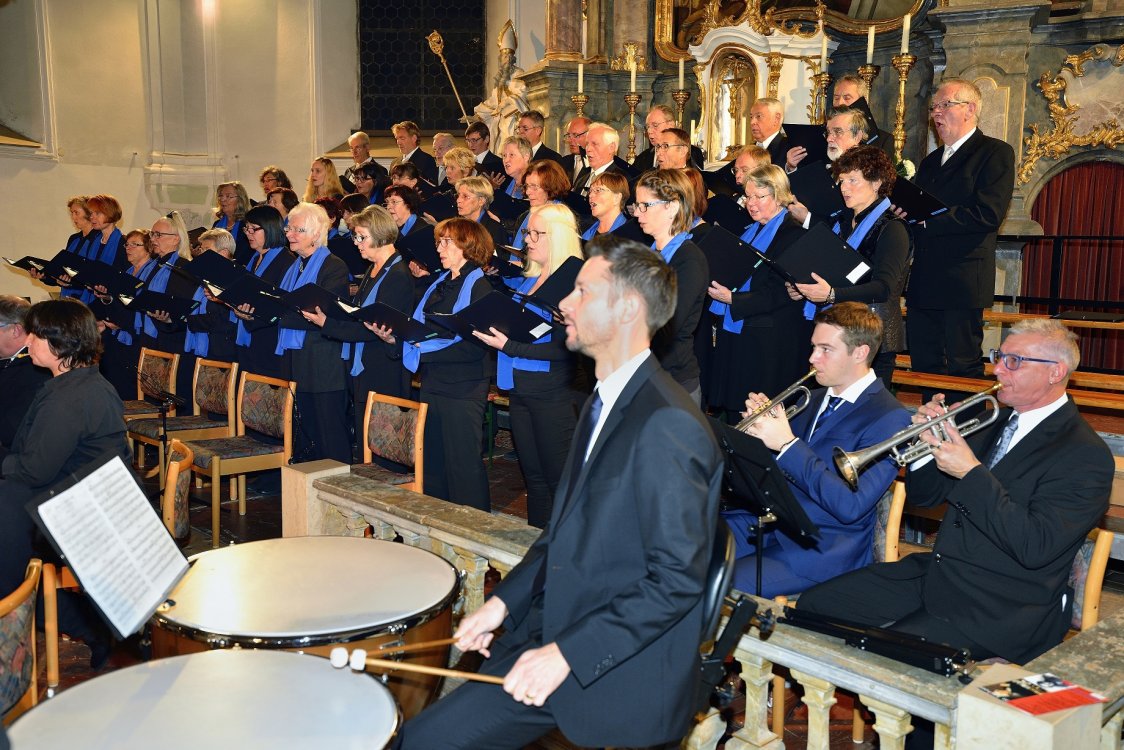
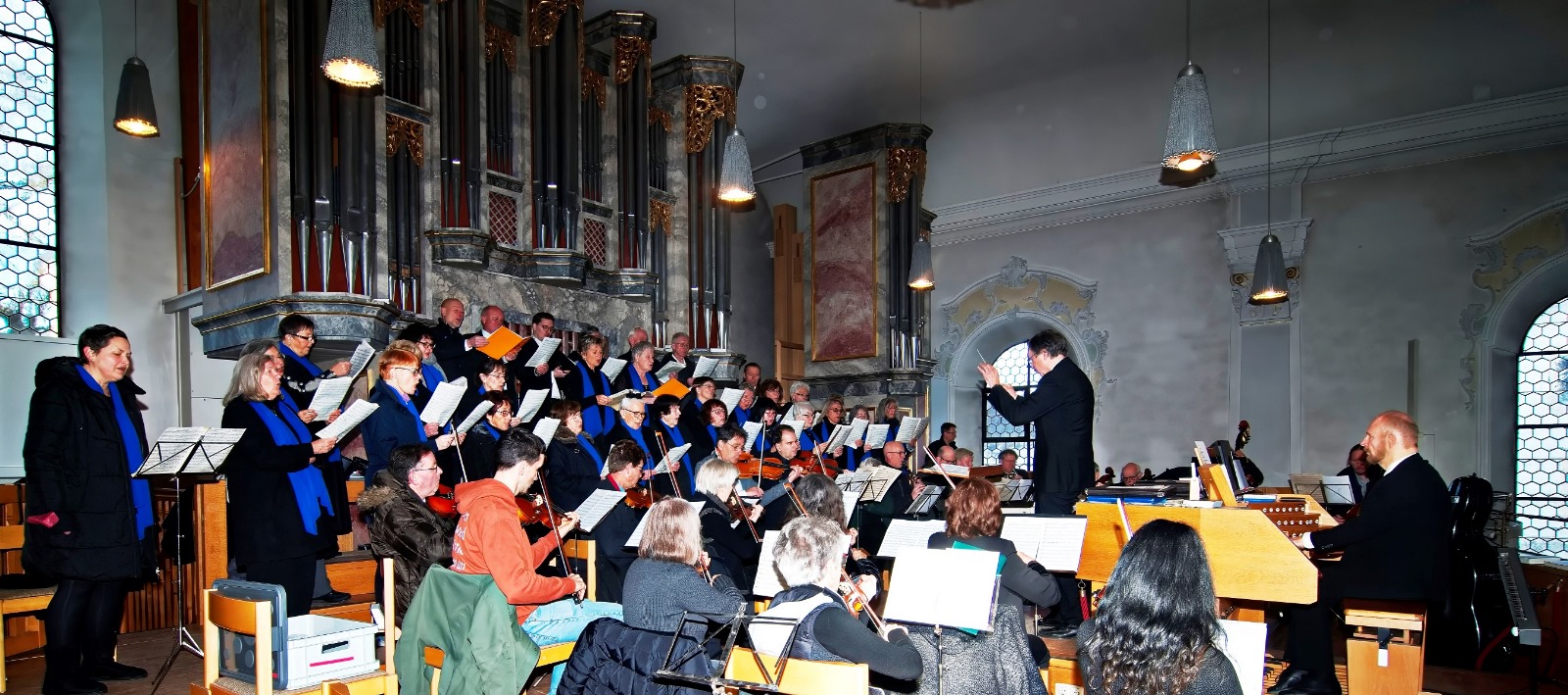
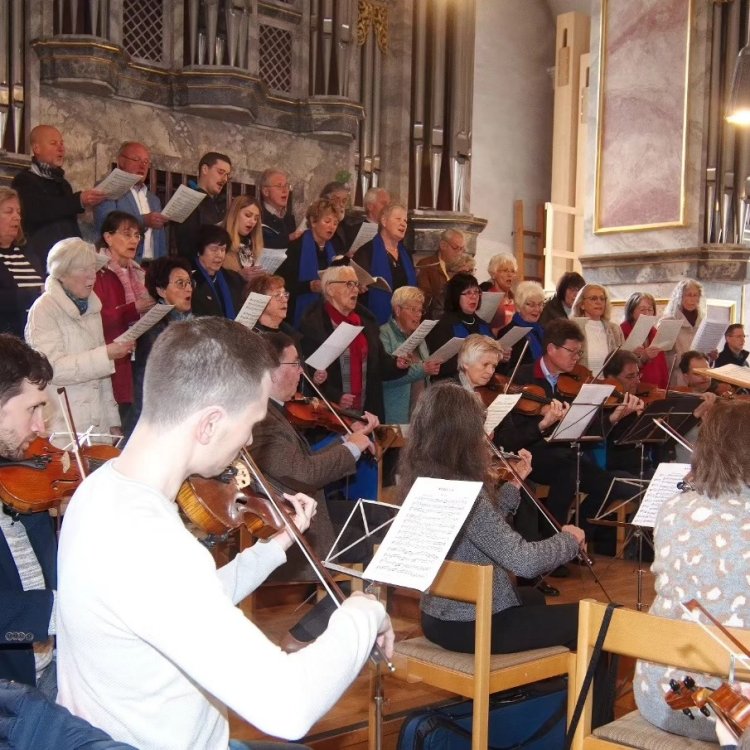
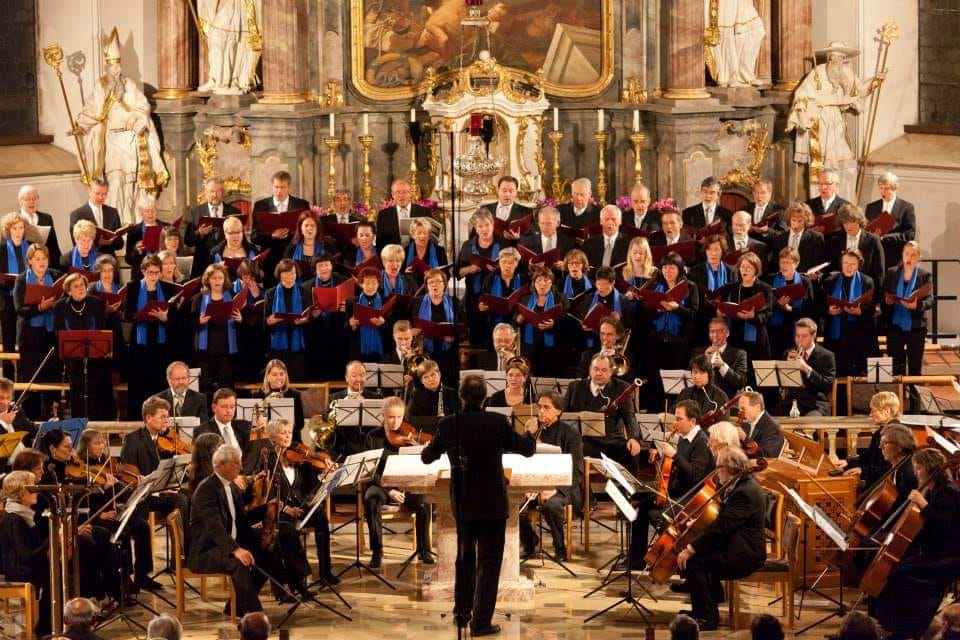
To this day, the energetic Church Music Director and Deanery Cantor of the Kempten and Sonthofen Deaneries leads the SMC Sonthofen and the Upper Allgäu Orchestra Association and is responsible for all matters relating to church music in the parish of St. Michael. |